
Hancock Park
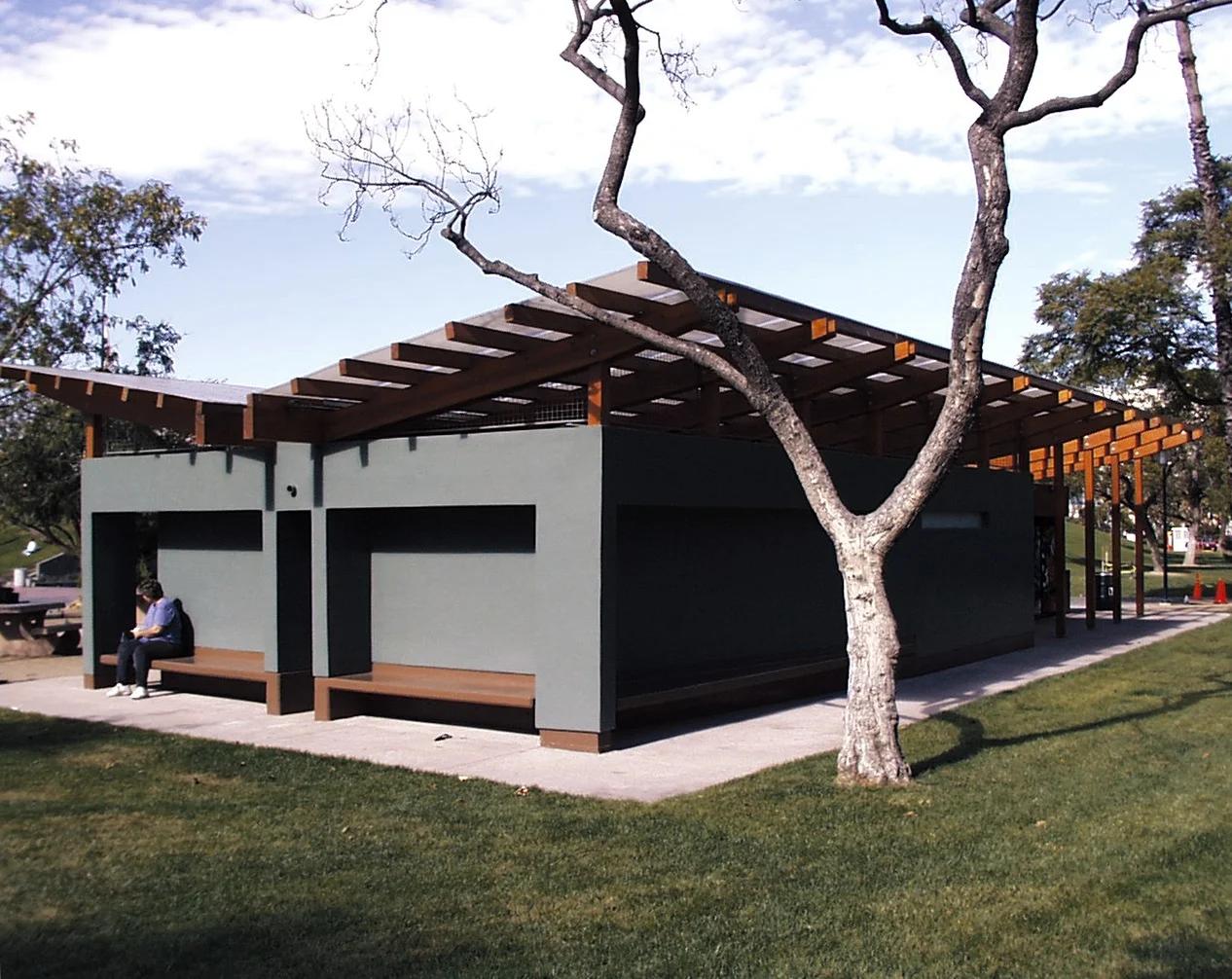
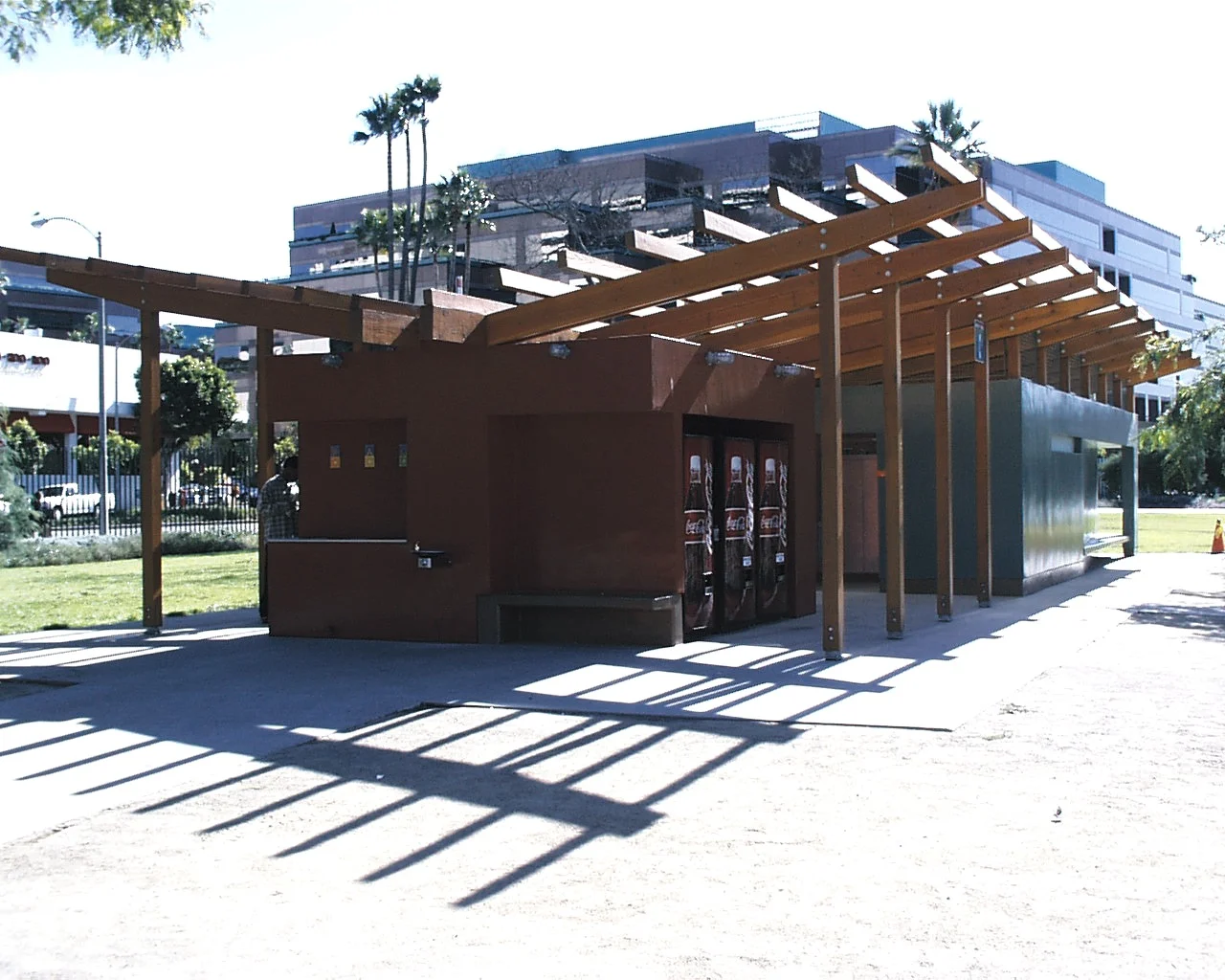
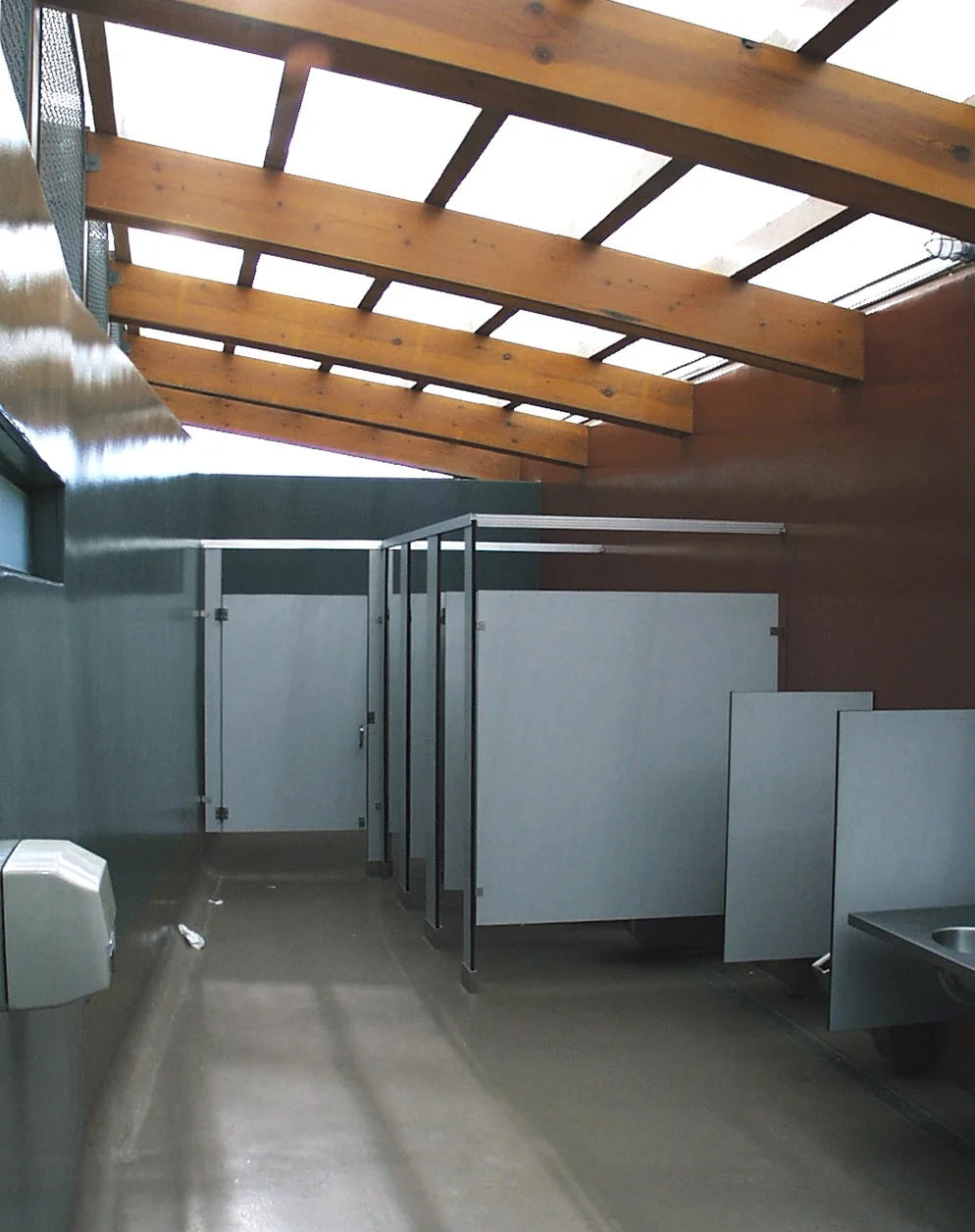
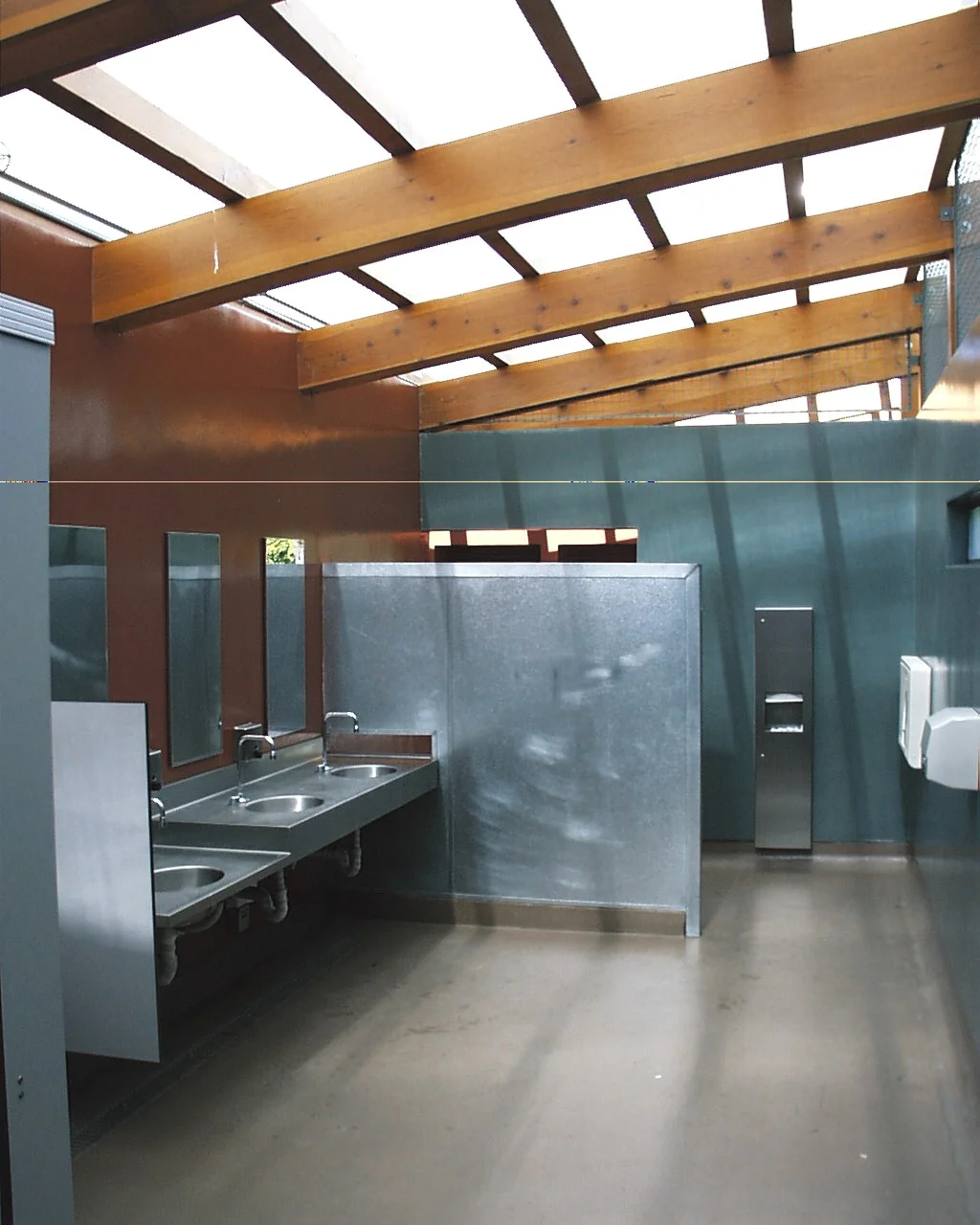
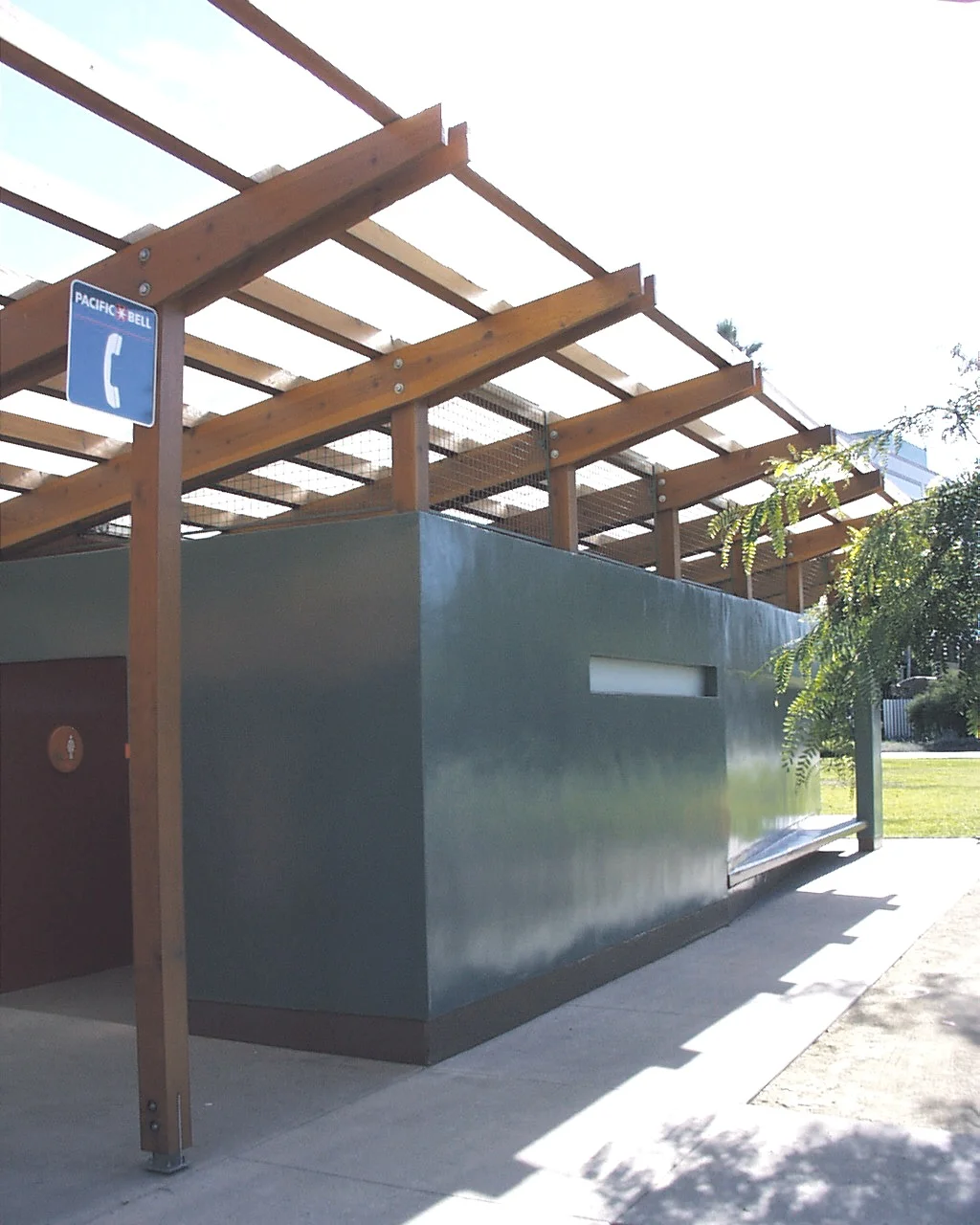
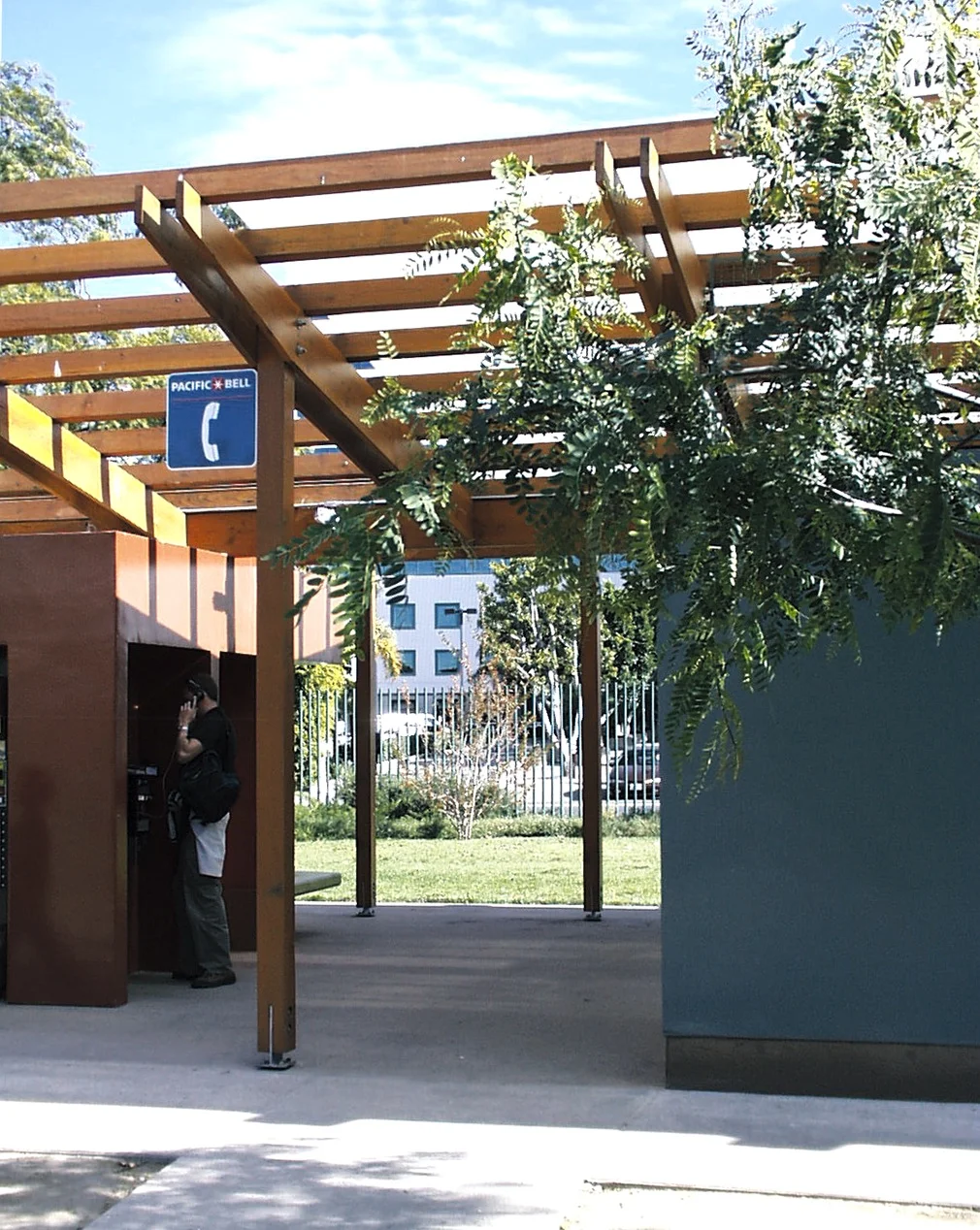
Standing at the southeast corner of Hancock Park, this restroom and vending facility was commissioned for the Los Angeles County Museum of Art and the Natural History Museum. Nestled within a grove of mature trees, the building was designed to maintain a continuous connection with its landscape and natural surroundings.
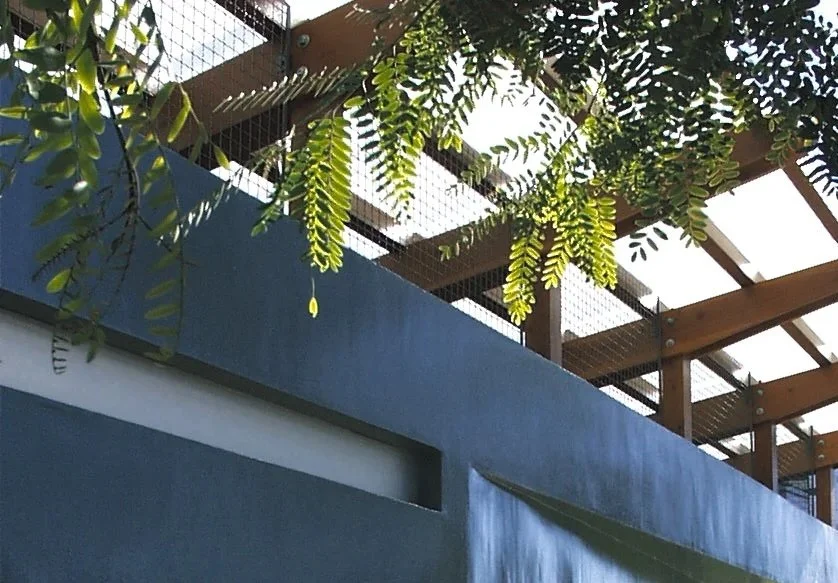
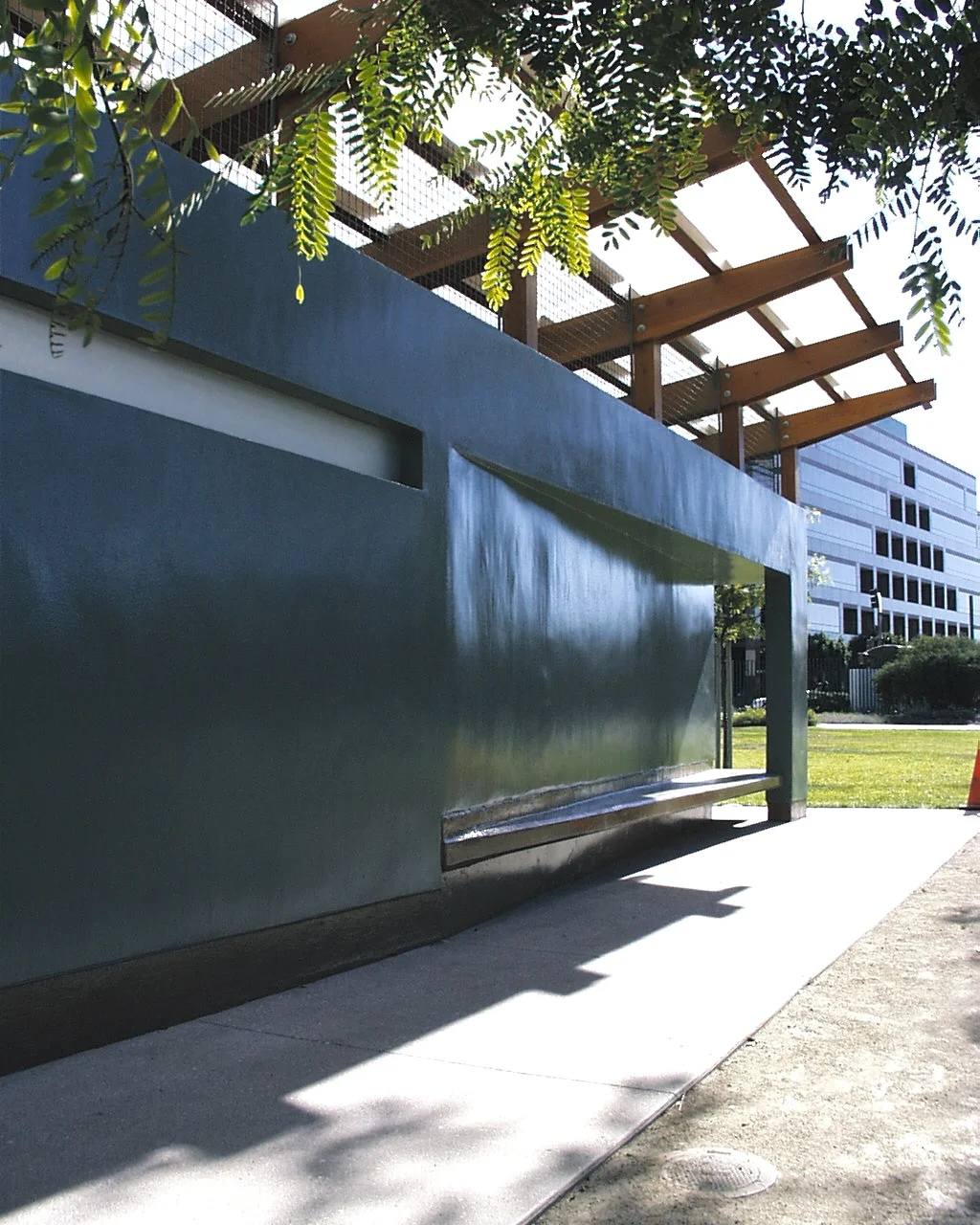
The sculptural, smooth-troweled plaster walls evoke the fossilized skull and skeletal forms of a living organism. These solid masses define the building's program while incorporating integrated concrete bench seating throughout the site. Above, a lightweight canopy of translucent panels filters daylight into the space, creating a luminous environment while framing views of the surrounding tree canopy. The innovative use of these translucent roof panels was central to the design and required a special modification to the building code to permit their installation. Supported by an open timber trellis, the roof structure acts as a vertebral spine, visually and structurally unifying the project.
Designed as an open-air pavilion, the facility relies on natural ventilation and daylight rather than mechanical systems, significantly reducing energy consumption and the need for artificial lighting. The material palette includes integrally pigmented smooth-troweled stucco, natural Douglas fir, sandblasted glass, concrete, and translucent polycarbonate glazing. Together, these durable and largely low-maintenance materials create an environmentally responsible building designed for longevity, balancing permanent construction with modular components that can be repaired or replaced over time.
This modest public facility demonstrates how utility buildings can engage their surroundings, enrich the visitor experience, and achieve environmental performance through passive design strategies rather than technological complexity.
Location: Los Angeles, CA
Completed: 1998